
NUREG 1556 Vol 1, Rev 2 (2016), NRC regulation: 10 CFR 20, 10 CFR 30, 10 CFR 71
RSO qualifications and Training
Education: N/A RSO Training: Manufacturer’s RSO course
Experience: Three months OJT at applicant’s or another similar facility, including experience operating the same type(s) of gauge(s) to be licensed
Gauge users: Portable gauge manufacturer’s course and hand-on training
Facilities: Must be adequate to protect health and to secure the source against loss or theft. Environment must fall within “Conditions of normal use” on source certificate
—
Radiation Safety Program Components
Dosimetry: Not required if licensee can show that workers are unlikely to exceed a limit
Instrumentation: Radiation survey instrument (e.g. Geiger tube, scintillation detector, ionization chamber) to locate lost source or check shielding after an incident.
Surveys: (10 CFR 20.1501) Frequently performed by contractor.
Sealed source inventory and leak testing: Required every 6 months; leak testing may be performed by licensee and counted by vendor or can all be performed by vendor.
Program audit: Annual; example audit program in Appendix E of this NUREG
—
Procedures: Required to develop and use security procedures, operating procedures and emergency or incident response procedures for each type of portable gauge
Radioactive package receiving: Required to have SOP for package receipt
Other considerations: If a licensee has multiple gauges in which the total activity of all sources exceeds Category 1 or Category 2 levels, refer to 10 CFR 37.
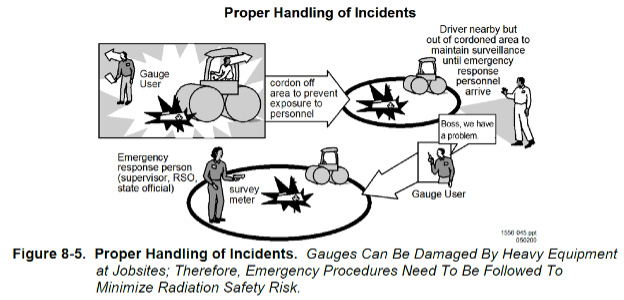
Portable gauges are sometimes damaged when in use in the field; survey in event of an accident or damage to instrument casing
Records retention
Receipt records: 3 years following transfer or disposal of source
Source transfer: 3 years following transfer or disposal of source
Inventory: 5 years
Disposal: Until license terminated
Important to decommissioning: Until site released for unrestricted use
Dosimetry: Until license terminated
Download this profile: