

In the beginning…
Hey Dr. Z! I read this very cool article in the New York Times about when life first appeared on Earth and it made me wonder what sorts of radiation levels the first organisms had to deal with. I’m guessing they were higher due to radioactive decay, but how much higher? And, for that matter, what about the universe – was there any radiation before the first stars had a chance to produce the first uranium, potassium, and other radionuclides?
This is a really interesting question! And, while it’s not a simple answer, I think we can figure it out. Let me start with the bigger question – radiation in the universe – and then we’ll take a look closer to home.
Radiation in the universe
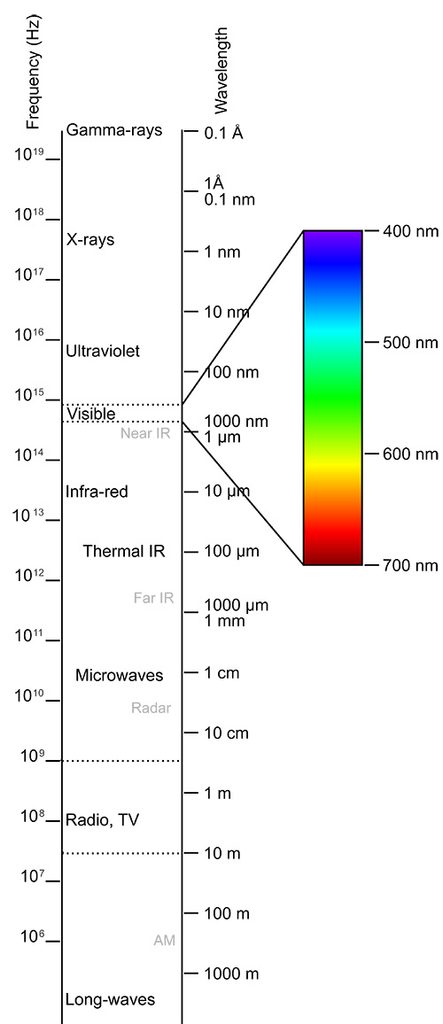
Let’s start with what “radiation” is – what most people think that what “radiation” means is the type of radiation I work with for a living; ionizing radiation (radiation with enough energy to remove an electron from an atom, ionizing it). But, to a physicist, “radiation” is a far more encompassing concept; it’s simply the transfer of energy from one location to another. This is why physicists and engineers include visible light, radio waves, and gravitational waves in the list of things they call “radiation.” So from the viewpoint of a physicist, “let there be light” includes radiation – visible light radiation – from the very instant of creation. That being said, there would have been an awful lot of ultraviolet, x-ray, and gamma radiation as well owing to the extraordinarily high temperature of the Big Bang, along with protons and electrons flying around at very high energies and giving off x-rays and gamma rays as they interacted with each other.
With time, the protons and electrons combined to form hydrogen and helium gas and small clumps of gas began collapsing to form stars – stars that produced ultraviolet light, that sprayed radiation in the form of ionized gas into the cosmos, and that began to produce radioactive materials deep in their cores and still more radioactivity when they eventually exploded, spraying it all into space when they exploded and died.
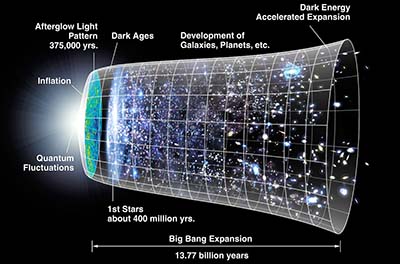
Ionizing radiation has been present in the universe since the first moments of its existence and will be present until it dies of old age at some point in the interminable future at levels that vary depending on the specific location and time you’d want to make measurements.
Radiation on Earth
Five or six billion years ago there was a slowly rotating cloud of dust and gas where our solar system now resides. After a relatively short life spent furiously fusing hydrogen into helium and helium into still heavier elements, massive stars swell into huge, cool stars called red giants. Late in their lives, conditions in the core change, robbing the stars of energy, and the red giants finish their lives by cataclysmically collapsing and blowing themselves apart in supernova explosions. With so much material and energy released, atoms slammed into each other to create even heavier atoms – up to plutonium. All of these debris cooled to form much of the dust of which the ancestral solar nebula was comprised while also sweeping up some of the hydrogen that lay in its path. And some time later, the expanding shock wave from yet another exploding star slammed into the solar nebula, initiating its collapse into a large central whirlpool, heating up as it collapsed and condensed until the temperature and pressure were high enough for hydrogen fusion to begin producing energy.
Smaller clumps of dust and gas seeded throughout the cloud eventually formed the planets, incorporating all of the elements synthesized within the stars and produced during the explosions…including the long-lived elements we see today (uranium, thorium, and potassium) and shorter-lived radionuclides such as iron (Fe-60) and plutonium (Pu-244) (speaking of which, traces of Fe-60 and Pu-244 from much more recent supernovae have actually been found in deep-sea sediments as well as Antarctic ice by researchers in both Europe and the US). For our purposes, though, these scant traces of plutonium and iron from dying stars don’t matter; there’s not enough to give a significant dose of radiation and, unless the star is in our backyard (cosmically speaking) it’s just not going to give enough dose to hurt anything. For our purposes, what’s important is that the dust from which our planet formed was laced with uranium, thorium, and potassium that were forged within the stars and that continue to irradiate us today; additionally, some of the debris becomes the galactic cosmic radiation that bombards our planet daily.
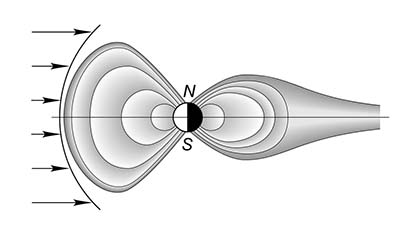
We also receive cosmic radiation from the Sun, which showers Earth with both ultraviolet radiation and radiation in the form of protons and electrons; all of these have changed over the history of our planet. In particular, solar activity has been steadily increasing over the eons, producing about 50% more ultraviolet today, while driving off ever-increasing amounts of particulate radiation than when the Sun was young. This not only increases our exposure to radiation from the Sun, but the increased solar wind also reduces radiation from outside the solar system.
With the increased UV, all else being equal, life today should need stronger sunscreen than it did four billion years ago. Luckily, all else is not equal – in particular, the earliest atmosphere lacked oxygen and therefore had no ozone layer, so the UV reached the surface unattenuated, hundreds of times as powerful as we experience today. Thanks to our protective ozone layer, we can survive a day at the beach with nothing more than a sunburn and without needing the protection of feathers, fur, or scales.
We also get radiation exposure from radioactivity in the rocks and soil, from uranium, thorium, and potassium that was incorporated into the original solar nebula. In the Earth as a whole, about half of the original U-238, an eighth of the original Th-232, and 90% of the original K-40 have decayed away since our planet formed, along with over 95% of our original U-235. But there’s more to dose from rocks and soils than the boring decay of the radionuclides in our planet – it turns out that the radionuclides aren’t evenly distributed and that some parts of our planet have more radioactivity and higher natural radiation levels than others.
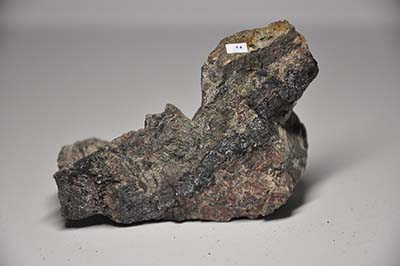
This is something we sort-of know even if we don’t realize it. I remember learning about the layers of the Earth – crust, mantle, and core – when I was in the 5th grade. What I didn’t realize was that these layers were the result of a process called differentiation. The iron core was first to form, when most of the planet’s iron sank through the lighter rocks in what’s called the iron catastrophe. The iron catastrophe took place in only a few tens of millions of years; the geochemical process that formed the Earth’s crust took hundreds of ties longer – a few billion years – and turned an originally homogeneous planet into the layered world on which we live. In particular, this included the geochemical processes that moved most of the Earth’s radioactivity into the crust by about 2 ½ billion years ago. This means that for a period of nearly two billion years after our planet formed radioactivity was accumulating in the crust a little more rapidly than it was decaying away, causing this source of exposure to increase by about 15% or so. Once the crust was formed most of the radioactivity had been relocated and, since then, there has been a relatively smooth decay to today’s levels. And since radon originates from the decay of U-238, radon concentrations have changed in the same manner as uranium, although dose from radon wasn’t really an issue until a mere 275 (or so) million years ago.
So that’s the big picture:
- UV emitted by the Sun has been rising slowly but UV reaching the Earth’s surface dropped abruptly when our ozone layer formed,
- Charged particles from the Sun have increased steadily since the Sun first started fusing hydrogen in its core,
- Radiation from geologic materials increased steadily due to the differential partition of radionuclides from the mantle into the crust about 2 to 2 ½ billion years ago and have been dropping steadily since then.
- Dose from radon is a more complex story, but I’ll have to cover that another time
- And, although I didn’t discuss it here, dose from K-40 in our bodies has been sort of boring, simply dropping with the decay of potassium over the ages.
Finally, there’s one detail I omitted; I’m not going to get into the nitty-gritty details here, but it bears mention. It turns out that oxygen in the atmosphere affects more than just UV-induced radiation damage – oxygen also enhances the sensitivity of DNA to radiation. Since oxygen levels on Earth have fluctuated tremendously through time, the same background radiation exposure caused different amounts of DNA damage at different times, depending on how much oxygen was in the atmosphere. That explanation, though, will have to wait for a later post.
I know this is a long answer to a short question, and includes a lot of moving parts – I hope you’re able to follow it. If not, that’s on me for not being clear enough; let me know and I’ll try again!
Image Credits:
- Image credit: “Electromagnetic Spectrum,” original illustration by Penubag; vector version by Victor Blacus (2012), via Wikimedia Commons. Licensed under the Creative Commons Attribution–ShareAlike 3.0 Unported license (CC BY-SA 3.0).
- Image credit: “Timeline of the Universe,” NASA/WMAP Science Team; modified by Cherkash, via Wikimedia Commons. Public domain in the United States.
- Image credit: “Uraninite,” photograph by H238 (2023), via Wikimedia Commons. Licensed under the Creative Commons Attribution–ShareAlike 4.0 International license (CC BY-SA 4.0).
- Image credit: “Solar Wind and Earth’s Magnetic Field,” illustration by Alec Baravik (2012), via Wikimedia Commons. Dedicated to the public domain under CC0 1.0 Universal.
